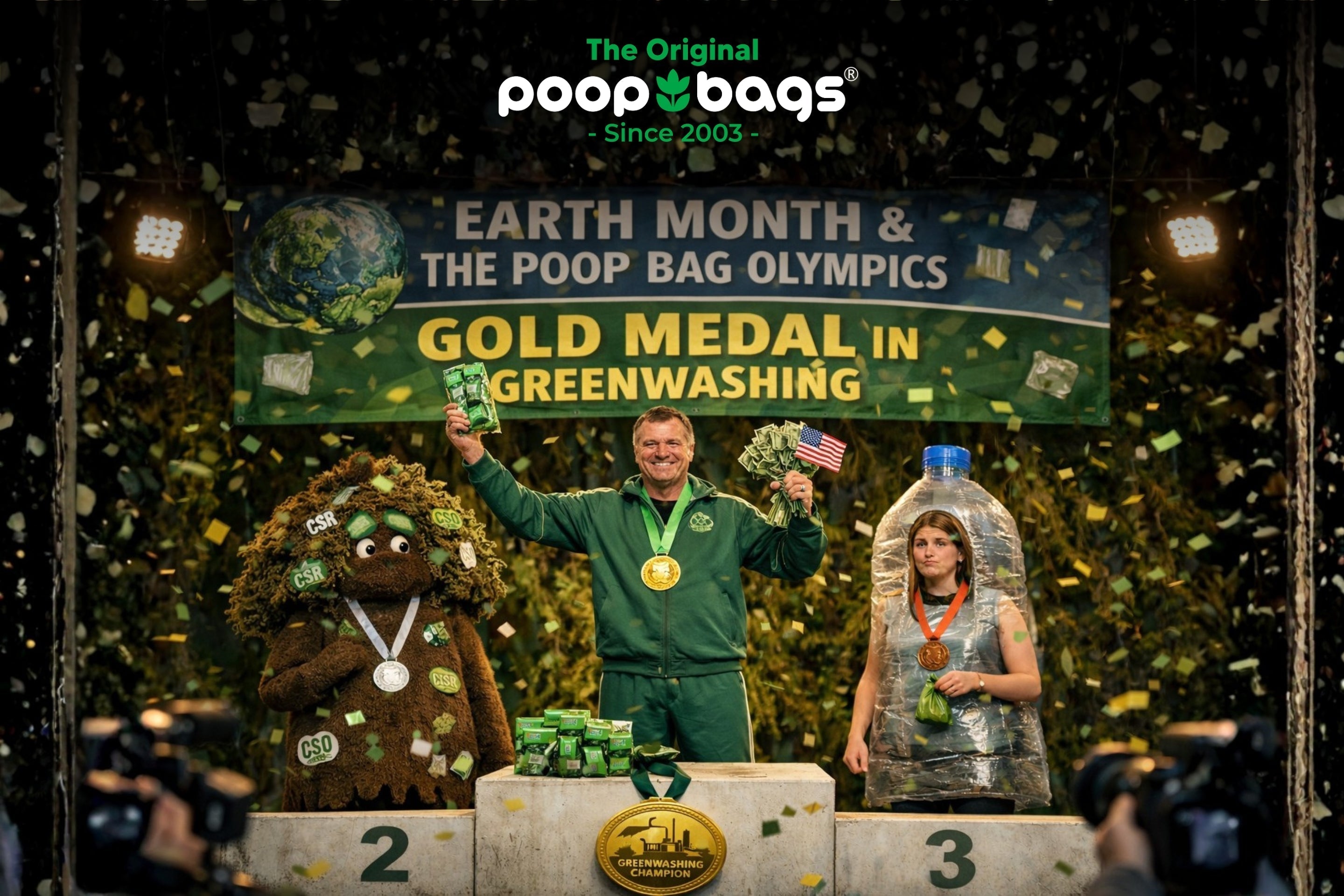


Earth Month and the Poop Bag Olympics: Gold Medal in Greenwashing
Every Earth Month, the poop bag industry suddenly discovers morality.
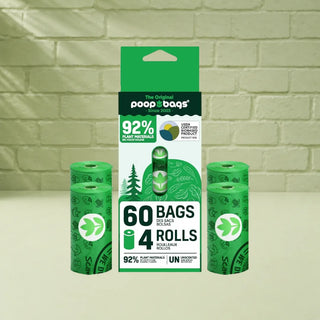
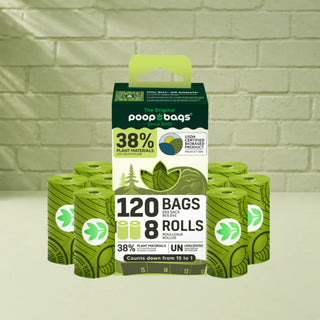
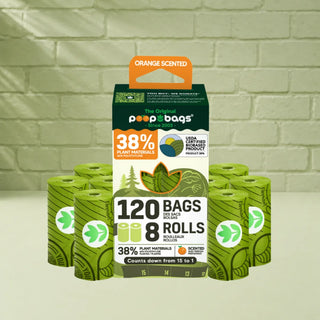
A plain old poop bag gets wrapped in soft green packaging, slapped with a leafy icon, and introduced like it just returned from saving the rainforest. The language gets cleaner. The claims get fuzzier. The vibe gets holier than it has any right to be.
One minute it is a bag for picking up dog poop. The next minute it is apparently a lifestyle choice, a climate statement, and a spiritual journey.
That is the problem.
Too many brands in this category are not selling clarity. They are selling comfort. They know pet parents want to make better choices. They know people care about the environment. They know Earth Month puts pressure on brands to sound responsible. So instead of saying something specific, measurable, and supportable, they reach for the usual magic words and hope no one asks a follow-up.
That is where greenwashing enters the chat, wearing sage green and acting smug.
The Federal Trade Commission has warned marketers against making broad environmental benefit claims like “eco-friendly” or “environmentally friendly” unless they can properly qualify and support them. The FTC’s guidance is blunt about it: broad claims can imply sweeping environmental benefits that are difficult, if not impossible, to substantiate.
So this blog is not an Earth Month love letter. It is a reality check.
What Greenwashing Looks Like in the Poop Bag Industry
Greenwashing usually does not show up wearing a name tag that says “Hi, I’m misleading.”
It shows up as packaging design, soft language, and carefully chosen half-truths. It appears in the gap between what a brand implies and what it can actually prove.
When Packaging Does the Talking
In the poop bag category, greenwashing often starts before a customer reads a single sentence.
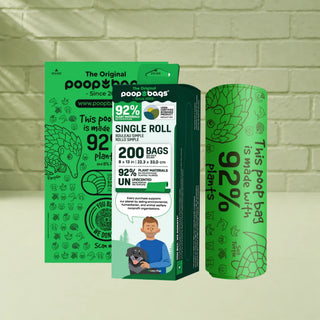
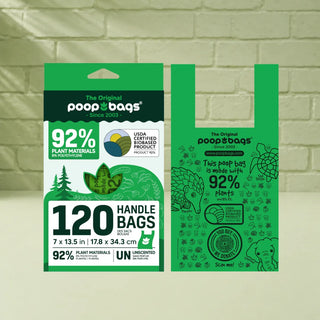
A muted color palette. A leaf icon. A kraft-paper look. A cloud, a tree, a sketch of the earth, maybe a font that looks hand-drawn by someone who definitely owns a reusable straw. None of that is proof.
The FTC makes clear that marketers are responsible not only for direct claims, but also for implied claims created by the overall impression of the product, including wording, symbols, seals, and design elements. If the whole package communicates an environmental benefit, that message still needs to be truthful and substantiated.
The Favorite Buzzwords
These are the usual suspects:
-
Eco-friendly - A broad marketing claim that suggests a product is generally better for the environment, but it is often too vague unless backed by specific proof.
-
Green - Another broad environmental claim that can imply wide environmental benefits, which is why it needs clear qualification to avoid being misleading.
-
Earth approved - A feel-good phrase with no standard legal meaning on its own, so it can easily create an unsupported environmental impression if not explained.
-
Better for the planet - A sweeping comparative claim that suggests overall environmental superiority, but it is too broad unless the brand specifies exactly what is better and why.
-
Compostable - A specific environmental claim that should only be used when there is reliable evidence the product will break down safely and appropriately in a composting environment, with limitations clearly disclosed if needed.
- Sustainable - A popular umbrella term that sounds credible but can still be vague unless the brand ties it to clear, measurable, supportable facts.
Some of these words may be usable in a qualified, truthful way. A lot of the time, they are used like decorative confetti.
The issue is not that environmental claims are automatically bad. The issue is that many brands use broad language to create a bigger impression than the evidence can support.
That is not transparency. That is costume design.
Why “Eco-Friendly” Is Not a Real Claim by Itself
“Eco-friendly” sounds nice.
That is exactly why it gets abused. It sounds positive, harmless, and responsible. It lets brands borrow environmental credibility without doing the hard work of being specific. It gives consumers a warm little emotional pat on the head while saying almost nothing concrete.
The FTC’s Position on Broad Environmental Claims
The FTC advises marketers not to make unqualified general environmental benefit claims such as “eco-friendly” or “green.” Why? Because consumers can reasonably interpret those claims to mean the product offers broad environmental benefits, and those broad meanings are often impossible to prove. The FTC says marketers should qualify those claims with specific, clear, and prominent information instead.
That matters in the poop bag category because this is exactly where vague language thrives.
A brand may want consumers to assume the bag is better across the board. Better materials. Better disposal outcome. Better impact. Better for the earth in some grand, sweeping sense.
But if the evidence only supports one narrow point, then the marketing should say that one narrow point.
Not ten imaginary ones.
A Better Test for Any Green Claim
If a customer asks, “What exactly do you mean by that?” the answer should be easy.
It should not require a panic attack in the legal department. It should not fall apart the second someone asks where, how, when, and under what conditions the claim is actually true.
A claim should survive four basic questions:
- What exactly is being claimed?
- What evidence supports it?
- What are the limits of that claim?
- What is the brand not claiming?
That is a far more useful test than “Does it sound good on a box?”
Let’s Talk About the Word “Compostable”
This is the crown jewel of Earth Month nonsense.
“Compostable” sounds responsible, clean, and magically complete. It suggests the product politely disappears back into nature while the birds sing and everyone feels morally superior on their evening walk.
Reality is less poetic.
What the FTC Says About Compostable Claims
The FTC’s Green Guides state that marketers should not make a compostable claim unless they have competent and reliable scientific evidence showing that the entire product or package will break down into usable compost safely and in a timely manner in an appropriate composting environment. If the product cannot be composted at home, that limitation should be clearly disclosed. Also, if the necessary composting facilities are not available to a substantial majority of consumers where the item is sold, an unqualified compostable claim may be deceptive. That is not a tiny footnote. That is the whole game. Because the real question is never just “Can this material compost somewhere under some conditions?”
The real question is, “What is true for normal customers in the real world?”
Why This Gets Messy With Poop Bags
Poop bags are not just about the bag material. They are also tied to pet waste disposal, and that is where a lot of the dreamy marketing starts to wobble.
EPA guidance for home composting specifically lists pet waste among materials to avoid in standard home compost systems.
So if a poop bag brand leans hard on compostability without addressing real-world disposal limitations, that is not brave sustainability leadership. That is selective storytelling.
The industry loves to sell the fantasy of clean disposal. The truth is that disposal systems, access, local rules, and pet waste realities matter. A lot.
Earth Month Is When Greenwashing Gets Louder
Earth Month should be a time for better education, better transparency, and better standards.
Instead, for many brands, it becomes a seasonal pageant.
The Annual Costume Party
Suddenly everything is:
-
Greener - A comparative environmental claim that implies something is better than another option, but it needs specifics about what is actually improved.
-
Kinder - A soft emotional phrase that suggests reduced harm, but on its own it says nothing measurable about environmental impact.
-
More natural - A phrase that suggests closeness to nature or fewer synthetic inputs, but it is often vague unless the product attribute is clearly defined.
- Better for the earth - A broad environmental benefit claim that can imply sweeping positive impact, which makes it risky unless backed by clear, specific evidence.
That is the absurd part. Consumers are expected to respond emotionally to aesthetics and vague adjectives, while the actual specifics stay blurry. Earth Month becomes less about truth and more about branding theater.
Why That Hurts Consumer Trust
People are not stupid. They are busy. And busy people often do not have time to decode every claim, inspect every qualifier, and play prosecutor in the pet aisle. That is exactly why the burden is on brands to be clear. When brands inflate weak claims during Earth Month, they do more than annoy people. They train consumers to distrust everyone. That hurts the whole category. It also punishes brands that are actually trying to communicate carefully and honestly.
What Honest Environmental Marketing Should Look Like
This is not complicated. Humans keep trying to turn it into performance art, but it is not complicated. Good environmental marketing should be specific, provable, and understandable.
What Brands Should Do Instead
Here is what honest communication looks like:
- Make narrow claims, not grand emotional declarations
- Explain what the claim covers
- Disclose important limitations clearly
- Avoid broad words that imply more than the evidence supports
- Make sure packaging design does not create a misleading overall impression
- Use proof that is competent, reliable, and relevant to the exact claim being made
That approach is less sexy than yelling “planet friendly” into the void, but it is far more credible.
The Difference Between Specific and Vague
Vague:
“This bag is eco-friendly.”
Better:
“This bag contains USDA-certified biobased content” or another clearly defined, supportable product attribute, assuming the claim is accurate and appropriately qualified.
See the difference? One is a mood. One is information.
One asks for applause. One earns trust.
What We Think Consumers Should Demand
Pet parents do not need another brand trying to cosplay as a climate savior because the calendar says April. They need honesty. They need brands that can explain their claims without dodging, fluffing, or hoping the leaf icon does the heavy lifting.
Here is the standard worth demanding from any poop bag brand, especially during Earth Month:
- Be specific about what makes the product different.
- Show the proof behind the claim.
- Explain the real-world limits.
- Avoid sweeping language that implies too much.
- Respect the customer enough to tell the truth plainly.
- That is not anti-environment. It is anti-nonsense.
- And frankly, the category needs more of that.
Final Thought: The Category Does Not Need More Halos
A poop bag does not become revolutionary because someone printed “eco-friendly” on a box in soft sage font.
A vague claim is still vague, even when it arrives during Earth Month wearing a leaf crown and talking about the planet like it just got back from therapy.
The FTC’s guidance is not subtle. Broad environmental claims need qualification. Compostable claims need evidence and context. Overall impressions matter, not just technical wording buried in fine print.
That means brands should stop asking for credit just for sounding nice.
If a claim is real, prove it.
If it has limits, say them.
If it only works in perfect conditions, disclose that.
And if Earth Month turns your product into a full-time method actor pretending to save the world, maybe the issue is not the customer. Maybe the issue is the script.
Sources:
-
FTC Green Guides overview: https://www.ftc.gov/news-events/topics/truth-advertising/green-guides
-
FTC summary of the Green Guides: https://www.ftc.gov/business-guidance/resources/environmental-claims-summary-green-guides
-
FTC consumer page on green marketing claims: https://consumer.ftc.gov/eco-friendly-green-marketing-claims
-
eCFR official text, Guides for the Use of Environmental Marketing Claims: https://www.ecfr.gov/current/title-16/chapter-I/subchapter-B/part-260
- U.S. EPA composting at home: https://www.epa.gov/recycle/composting-home