
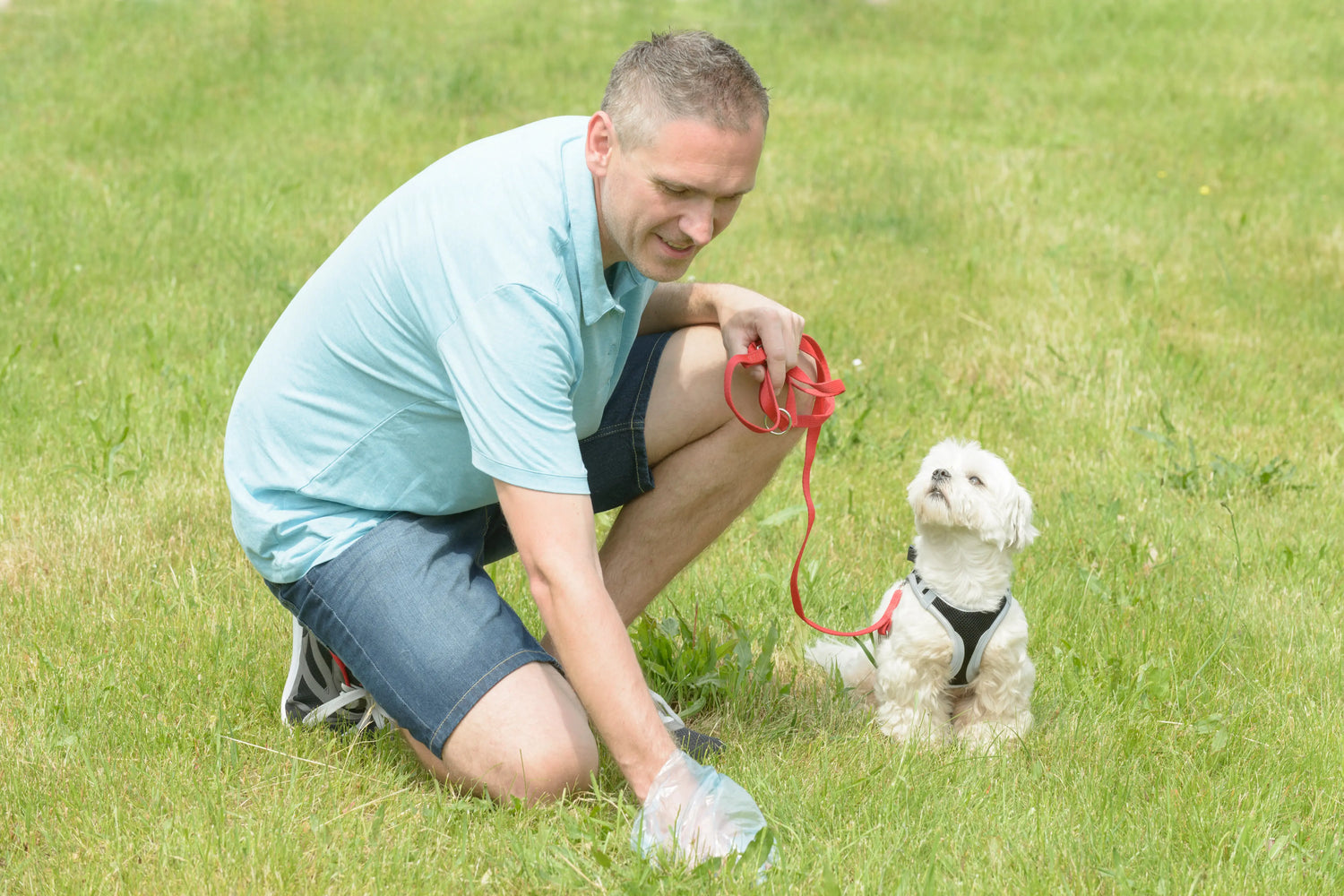
With roughly 68 million dogs living in American households, the daily routine of picking up after a pet is one of the most universal experiences among dog owners. It is also one of the most underestimated. The bag you reach for on every walk determines whether your hands stay clean, whether harmful bacteria stay contained, and whether your purchase leaves a lasting mark on the environment.
Most pet owners grab whatever poop bags are cheapest or most convenient without a second thought. But a growing body of material science research and shifting consumer expectations are revealing that not all bags are created equal. Durability is a word that gets tossed around on packaging without much explanation. What does it actually mean for a poop bag to be durable? And why should you care beyond avoiding an unpleasant mid-walk surprise? This post unpacks what goes into making strong poop bags for dogs, from the raw materials and thickness measurements that engineers obsess over, to the practical features that separate a reliable bag from a regrettable one.
Why Bag Durability Is More Than a Marketing Buzzword
Durability in a poop bag is about maintaining structural integrity from the moment you tear the bag off the roll until it is sealed in a trash bin. That journey involves stretching, contact with rough surfaces like asphalt and gravel, exposure to moisture, and the internal pressure of tying a knot. A bag that fails at any of those stages creates a mess and a public health risk.

Pet waste was a nonpoint-source pollutant in 1991, and the science has only reinforced that designation since. A single gram of dog waste contains approximately 23 million coliform bacteria, nearly double what is found in human waste. When a bag tears and waste comes into contact with your hands, sidewalks, or storm drains, those bacteria enter the broader environment. Choosing leak-proof poop bags is a sanitation decision. For owners of larger breeds, the stakes are higher. A dog averaging 70 pounds or more can produce over half a pound of waste per day. Standard-thickness bags were never engineered to reliably handle that volume, which is why poop bags for large dogs have become their own product category.
The Science of Thickness: Microns, Materials, and Real-World Performance
When manufacturers talk about bag strength, they are usually referring to thickness measured in microns. Research compiled by pet product testing organizations shows that bags at 15 microns or above are roughly 30 percent less likely to tear during use. For context, a standard grocery bag is around 12 to 15 microns thick. Heavy-duty poop bags designed for pet waste typically aim for 20 microns or higher, which provides enough tensile strength to resist punctures from sharp objects such as sticks, gravel edges, or bone fragments in the waste.
But thickness alone does not tell the full story. The type of plastic matters just as much. High-density polyethylene (HDPE) has traditionally been the go-to material because it offers a strong tear resistance relative to its weight. Newer formulations blend HDPE with plant-based polymers like polylactic acid (PLA) and polybutylene adipate terephthalate (PBAT), both derived from renewable resources like cornstarch. These blends maintain the tensile resistance dog owners need while opening the door to compostability.
A well-engineered bag uses a multilayer structure. Think of it like plywood, where alternating grain directions create strength that a single sheet cannot match. This layered approach is what separates thick dog waste bags from cheap single-ply alternatives that stretch thin at the first sign of stress. When you are shopping for thick dog poop bags, look for manufacturers that specify their micron count rather than just using vague terms like "extra strong." Cornstarch-based bags from quality manufacturers survived with only minor surface marks, while thinner conventional bags developed visible weak points. Material composition and engineering matter as much as raw thickness.
What Makes a Bag Truly Leak-Proof
Leak resistance is the feature dog owners worry about most. A bag that holds its shape during pickup but seeps moisture through microscopic pores during the walk home defeats its own purpose. True leak-proof performance comes down to three engineering factors: seam integrity, material porosity, and puncture resistance.
Seam integrity refers to the quality of the bond between the bottom and side seals of the bag. Heat-sealed seams, where plastic layers are fused rather than glued, create a continuous barrier with no weak points. Cheaper bags often use adhesive bonding, which can separate under the weight and moisture of waste. This is a critical distinction with heavy-duty dog waste bags.
Puncture resistance ties back to the multilayer construction discussed earlier. A bag that resists a sharp poke from a twig or a piece of kibble in the waste is a bag that keeps its leak-proof promise intact throughout the walk. For owners seeking extra-strong dog poop bags, this combination of sealed seams, dense material, and puncture resistance is the trifecta to look for. Brands like Poop Bags have built their reputation on this kind of engineering rigor, offering products in which leak-proof performance is a tested standard rather than a marketing afterthought.
Handles, Fit, and the Ergonomics of Waste Pickup
Large dog poop bags with handles have gained popularity because they solve multiple problems at once. Tie handles allow you to seal the bag with a secure knot that traps odor inside, and they give you a loop to carry the bag without gripping the waste directly. Size is equally important. A bag that is too small for the job forces you to rush the pickup and risk contact with waste. Industry data suggests that bags sized 27 percent larger than the standard offering provide better coverage, meaningfully, especially for owners who need large biodegradable dog poop bags that can handle the output of breeds like Labrador Retrievers, German Shepherds, or Mastiffs.

Then there is the opening experience. Perforated rolls that tear cleanly every time might sound like a small detail, but anyone who has fumbled with a stuck bag while their dog waits impatiently knows the frustration. The best poop bag features are the ones that disappear into the background. You do not notice them because everything just works.
The Eco-Friendly Dimension: Durability That Does Not Cost the Planet
Here is where the conversation gets more nuanced. Thicker, more durable bags are better for the user experience, but traditional plastic bags persist in landfills for 75 to 400 years. The pet waste industry accounts for roughly 0.6 percent of global plastic waste, a figure projected to rise as dog ownership continues to grow worldwide.
This tension between durability and environmental responsibility has driven a wave of innovation in eco-friendly dog accessories for waste management. Compostable bags certified under ASTM D6400, the U.S. standard for plastics designed to decompose in industrial composting facilities, must achieve at least 90 percent carbon-to-CO2 conversion within 180 days. Bags carrying this certification are engineered to break down into water, carbon dioxide, and biomass without leaving toxic residue.
So what is a responsible dog owner to do? The answer lies in choosing bags that are durable enough to prevent waste from entering the environment and made from materials that minimize long-term harm. Some manufacturers now use a blend of post-consumer recycled plastic with biobased components and accelerant additives that help microbes in landfills consume the bag in under five years rather than centuries. Products like Earth-rated poop bags have become popular in this space, offering a middle ground between performance and environmental consideration.
How to Evaluate Poop Bag Quality Before You Buy
Armed with the knowledge of what makes a bag genuinely durable, here is how to cut through the noise when you are ready to buy poop bags for dogs online or in a store:
- Check the Micron Count First: Start with the micron count. If a manufacturer does not disclose it, that is usually a red flag. Bags at or above 20 microns offer the reliability most owners need for everyday walks. If you have a large breed, aim higher. Look specifically for thick poop bags for dogs engineered for heavier loads.
- Inspect the Seam Construction: Next, check the seam construction. Heat-sealed bottom seams are the industry standard for quality products. If the packaging does not specify the seam type, examine the bag itself. Adhesive-bonded seams often have a visible ridge or inconsistency along the seal line. That ridge is a structural weak point. Under the weight and pressure of a full bag, a poorly bonded seam is where failures begin. A clean, uniform heat seal is one of the clearest indicators that a manufacturer has invested in real production quality.
- Look for Third-Party Certifications: Look for third-party certifications that verify the claims on the label. Any brand can print "eco-friendly" on packaging. Far fewer will submit their products for independent testing and make those results publicly available for buyers to confirm.
Read reviews from owners of similar-sized dogs before committing to a bulk purchase. Thickness ratings and certifications tell part of the story, but real-world feedback from people walking the same size dog over the same terrain will tell you the rest.
The Real Cost of Choosing the Wrong Bag
A dog owner picking up after their pet twice a day uses roughly 730 bags per year. If one in ten of those bags tears, that is 73 failed pickups annually. Each failure means direct contact with bacteria-laden waste, potential contamination of public spaces, and the hassle of using a second bag to clean up the mess. Switching to premium dog poop bags that cost a few cents more per unit but deliver consistent, tear-free performance actually reduces total cost over time when you factor in double-bagging, hand sanitizer, and the occasional ruined pair of gloves. Quality bags also reduce environmental burden by eliminating waste from failed bags that would otherwise end up in the trash alongside their replacements.
For owners already committed to sustainability, investing in large biodegradable dog poop bags from a trusted manufacturer means every walk aligns with a broader commitment to reducing plastic pollution. It is a small daily choice with a cumulative impact that scales across the nearly 68 million dog-owning households in the country.
The poop bag market is evolving faster than most pet owners realize. Material scientists are developing next-generation bioplastics that match the strength of conventional HDPE while decomposing in standard landfill conditions within years rather than centuries. Additive technologies that accelerate microbial breakdown without sacrificing mid-use durability are already in commercial production. Consumer expectations are evolving alongside science. Millennials and Gen Z are the primary drivers of demand for sustainable pet products. These demographics actively seek out brands that can demonstrate verified environmental credentials, not just make vague green claims on the packaging.

The convergence of material innovation and consumer demand means that the gap between "durable" and "sustainable" is closing. Five years ago, choosing strong poop bags for dogs meant choosing conventional plastic. Today, plant-based blends and recycled-content formulations deliver comparable strength with a fraction of the environmental footprint. Brands that invest in certified, transparent, and rigorously tested products, like Poop Bags, are setting the standard for where this category is headed.
Durability is a system of material quality, engineering precision, practical design, and environmental responsibility working together. The bag that tears on a Tuesday morning walk is an engineering failure with real consequences for hygiene, public spaces, and the environment. The bag that holds firm, ties securely, and breaks down responsibly after disposal is the product of deliberate design choices that deserve your attention. The next time you reach for a roll of eco-friendly poop bags, you will know exactly what to look for and why it matters.
Sources:
- American Pet Products Association — National Pet Owners Survey
- U.S. EPA — Pet Waste as a Nonpoint Source Pollutant
- University of Maryland — The Impact of Pet Waste on Water Quality and Public Health
- PMC / MDPI Animals — Environmental Pawprint of Dogs as a Contributor to Climate Change
- TIME — Compostable Dog Poop Bags Aren't Really That Compostable
- PMC — End-of-Life Management of Biodegradable Plastic Dog Poop Bags through Composting of Green Waste
- CNN Underscored — Best Dog Poop Bags in 2025, Tried and Tested
- GM Insights — Sustainable Pet Products Market Size and Share 2025–2034
- MetaTech Insights — Eco-Friendly Pet Products Market Share and Size 2025–2035
- BiopolyLab — Eco-Friendly Dog Poop Bags Made from Corn Starch and PLA