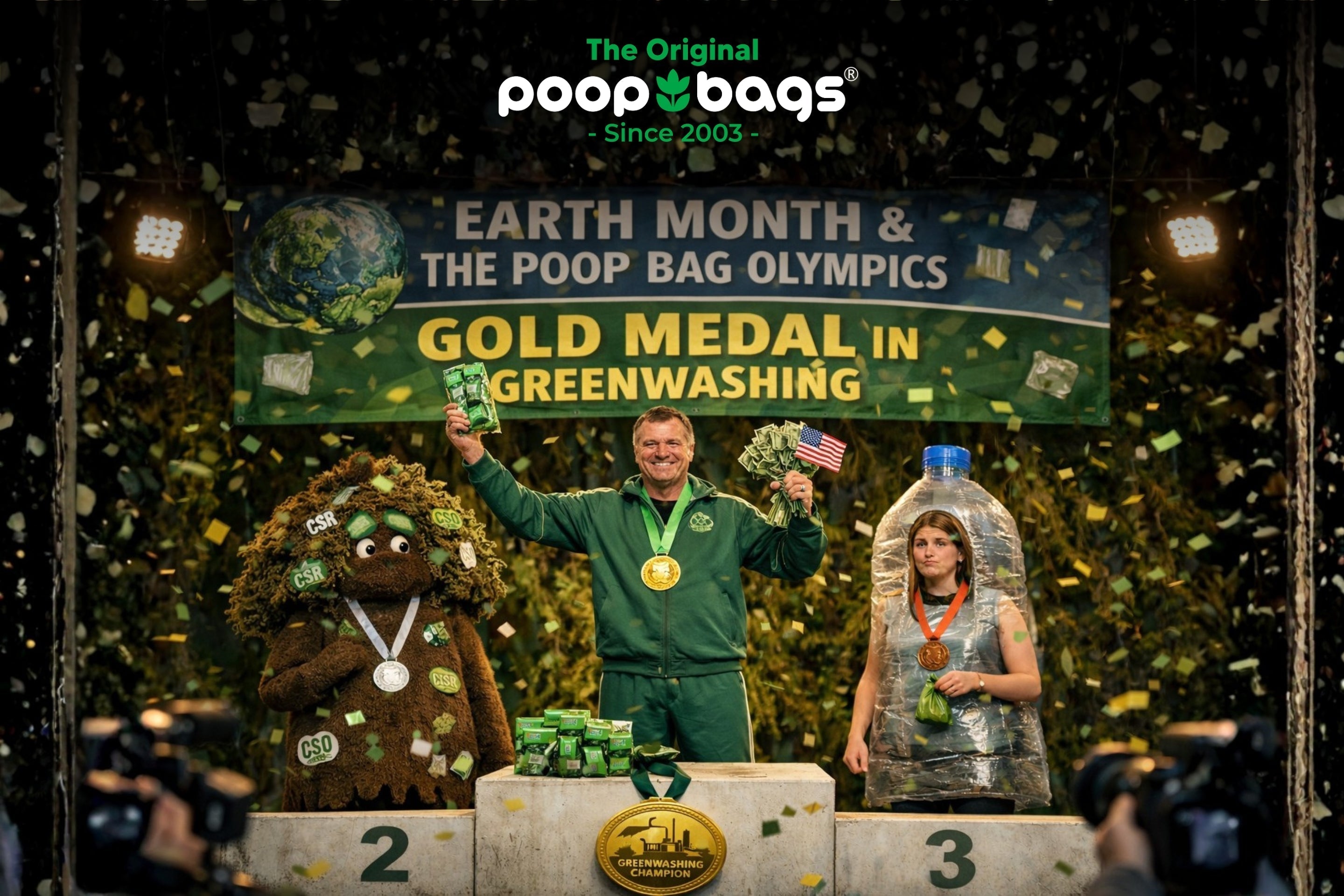


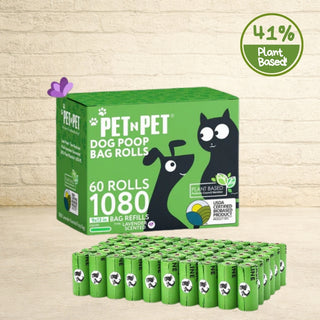
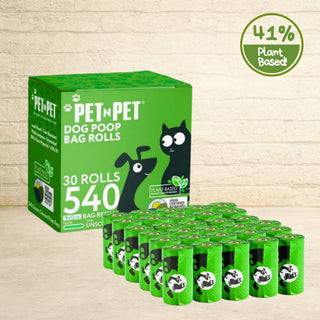
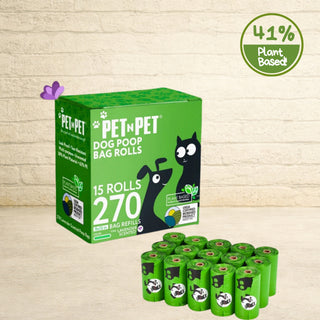
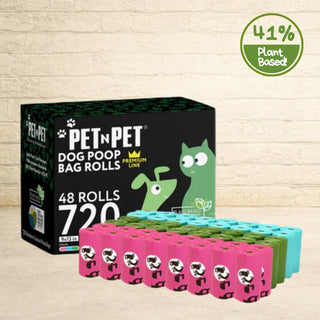
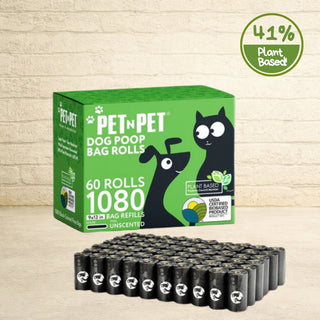
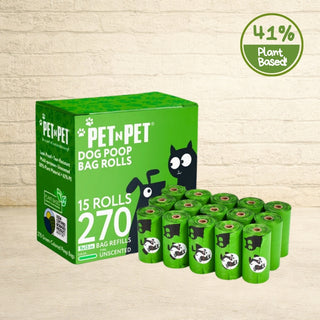
The packaging on biodegradable poop bags can read like a chemistry textbook mixed with marketing copy. Words like "compostable," "biobased," "plant-based," and "degradable" appear alongside leaf graphics and certification logos that may or may not be verifiable. Pet parents trying to do the right thing often walk away from the aisle, uncertain whether they bought a genuine eco product or sophisticated greenwashing. The good news is that decoding biodegradable poop bag labels is a learnable skill that requires no scientific background.
Why Poop Bag Labels Confuse Almost Everyone
The Marketing Vocabulary Gap
Pet bag labels exist in a regulatory grey zone where marketing language outpaces enforcement. The confusion is structural rather than accidental. Marketing teams write packaging to feel reassuring. Regulators define a smaller set of terms with specific meanings. The gap between marketing language and regulated vocabulary is where most label confusion lives.
Regulatory Inconsistencies
Pet bags fall under broader environmental marketing rules but lack pet-specific labeling standards. Food packaging labels are stricter than pet packaging labels. The inconsistency allows brands to borrow language from one category without inheriting the verification requirements that originally gave it meaning. Three seconds at the shelf is not enough to verify a label. Most consumers default to the visual cues: green color, leaf graphic, eco-sounding adjective. The shortcut fails consistently. A five-minute verification, ideally done once for a brand you plan to keep, catches the gap before the cart fills up.

The Six Words That Carry Real Meaning
Six terms on poop bag labels carry verifiable meaning when accompanied by the right supporting evidence. Knowing them shortens the verification process considerably:
- "Compostable" Under Specific Standards: "Compostable" has real meaning when paired with a specific standard, such as ASTM D6400 or EN 13432. ASTM D6400 and EN 13432 define breakdown speed, residue toxicity, and disintegration thresholds across industrial composting environments. Industrial composting environments require sustained temperatures of 131 degrees Fahrenheit or higher, which most home compost piles never reach. Home compost limitations mean certified biodegradable poop bags that claim compostability without naming a standard are using the term for marketing rather than as verifiable evidence. Verifiable evidence requires both the standard reference and the certifying body to be listed clearly on the packaging.
- "Biodegradable" With Conditions: The claim is meaningful only when paired with conditions, including timeframe, environment, and temperature. Timeframe and temperature specifications matter because breakdown rates vary enormously across landfills, home compost, and industrial facilities. Industrial facilities can break down bags in 90 to 180 days, while landfill conditions can preserve the same material for decades. Decades-long breakdown timelines render unqualified biodegradable claims essentially meaningless. Meaningful biodegradable poop bag labels state the conditions explicitly, including the test environment, the temperature range, and the percentage of material that breaks down within a defined window. Defined windows separate honest claims from greenwashing.
- "Biobased" With Percentages: The USDA BioPreferred Program verifies biobased content through independent lab testing. Lab testing measures the percentage of biologically renewable carbon in the finished product. Finished product percentages on USDA biobased poop bag label designations are backed by independent measurements, such as 30 percent, 60 percent, or 90 percent biobased content. Biobased content percentages above 50 percent generally indicate meaningful plant-derived material rather than petroleum-based filler. Petroleum-based filler often hides behind vague biobased language, so a bag claiming "biobased" without naming a percentage is using the term loosely and avoiding the verification step that gives the claim weight.
- "Plant-Based" With Verified Content: "Plant-based" overlaps with biobased but is used more loosely across marketing campaigns. Marketing campaigns often deploy plant-based language without quantifying the actual plant content in the finished bag. Actual plant content varies widely, from token amounts under 10 percent to substantial percentages above 60 percent. Above 60 percent biobased content typically signals a genuine plant-based formulation rather than promotional language. Promotional language without numbers cannot be verified, so the credible version of plant-based always specifies a plant content percentage and ideally pairs that percentage with a USDA BioPreferred certification. USDA BioPreferred certification converts marketing language into measurable, third-party-verified content.
- "Certified" With A Specific Body: ASTM, BPI, USDA BioPreferred, and TÜV are common credible certifying bodies in the compostable and biobased product industries. Compostable and biobased product industries depend on these bodies for standardized testing, labeling rules, and ongoing compliance monitoring. Ongoing compliance monitoring distinguishes legitimate certifications from one-time marketing claims. Marketing claims that reference "certified" without naming the certifying body, or that cite obscure bodies no one has heard of, usually function as fabricated reassurance rather than verified compliance. Verified compliance requires the body name, the standard, and ideally a certification number that can be cross-referenced in the certifying body's public registry.
- "Tested" With A Numerical Reference: "Tested" labels should reference the test standard and the measurable result to qualify as credible evidence. Credible evidence requires disclosure of the testing protocol, the laboratory, and the specific outcome measured against the standard. Outcomes measured against established standards include percentage of material decomposed, time elapsed, and residue toxicity levels. Residue toxicity levels and decomposition percentages provide numerical references that convert a vague "tested" claim into verifiable data. Verifiable data on third-party certified poop bag claims includes specific lab names, standard references, and result numbers. Result numbers separate genuine testing from filler language designed to project legitimacy.
Real verification supports buying decisions that align with environmental priorities and gives shoppers the evidence needed to distinguish certified compostable, biobased, and biodegradable products from those that only borrow the language without earning the substance.
The Vague Words That Carry No Weight
Several common label words have no regulated meaning. They look reassuring, but do not constrain the product in any verifiable way. Each appears credible due to repetition, yet none constrain the product without supporting evidence elsewhere on the package:
- "Eco-Friendly" Without Naming What's Eco About It: The term reassures without committing the brand to any specific environmental performance. The Federal Trade Commission's Green Guides explicitly identify "eco-friendly" as a problematic, unqualified claim. Look for the specific evidence elsewhere on the package or in the brand's published documentation.
- "Natural" In Any Context Outside Of Verified Food Standards: Petroleum is natural. Lead is natural. The term offers reassurance without imposing any constraint on the product. Greenwashed poop bag claims lean heavily on "natural" because the word survives scrutiny better than more specific claims that would require verification.
- "Earth-Friendly" or "Earth-Conscious": Both phrases are synonyms for "eco-friendly" and share similar regulatory weaknesses. A bag labeled "earth-friendly" with no certification logo or test reference is essentially making a marketing claim without verifiable evidence.
- "Decomposes Naturally" Without Time and Conditions Specified: Decomposition depends on temperature, moisture, oxygen, and microbial activity. A claim that ignores conditions is essentially saying nothing. Degradable poop bag labels with this phrasing usually rely on consumers' assumption that "naturally" implies fast or harmless breakdown.
- "Plant-Powered" Or "Plant-Driven": These phrases imply but do not state plant content percentage. A bag with 5% plant additives can technically use these phrases. Without a verified percentage backed by USDA BioPreferred or another lab, the wording is marketing rather than measurement.
Recycled content can range from a trace to near-total. Without a percentage, the claim is essentially decorative. Genuine recycled-content products disclose the specific percentage and the source verification, ideally backed by a third-party recycler audit.

Understanding Decomposition Claims
Time Frames Without Conditions Specified
Decomposition claims are where most label confusion concentrates. "Breaks down in 90 days" means almost nothing without naming the conditions. The same bag can take 90 days in industrial composting and 90 years in a sealed landfill. The U.S. Environmental Protection Agency's composting at home guidance describes the typical conditions home compost actually delivers. Lab conditions are optimized for breakdown. Real-world disposal almost never matches the lab. Plant content label on poop bags that ignore the gap between lab and reality often disappoint consumers who expected the lab-condition timeline in their backyard or municipal bin.
The Industrial Composting Default
Most "compostable" pet bags require industrial composting to deliver their promised breakdown. Most U.S. municipalities exclude pet waste from green-bin programs. The mismatch matters. The bag may be technically compostable, but have no practical composting option available in the buyer's area.
Cross-Referencing Claims Against Databases
ASTM-certified products appear in BPI's compostable products catalog. Search by brand name or product SKU. The match should be current, not expired. Biodegradable bag certification logos linked to ASTM should match within seconds when searched in the public catalog.
The BPI catalog is searchable by brand, product, and certification status. A bag bearing the BPI logo should display an active certification. Bags missing from the catalog, despite displaying the logo, represent unverified or expired claims worth flagging. The USDA catalog lists every certified biobased product with its tested percentage. Buyers can search by brand or SKU. Transparent poop bag brand labels typically include a USDA certification number directly on the package, which speeds the database lookup considerably.
TÜV issues digital certificates that brands can publish on their websites. Direct verification through TÜV's online system confirms the certification's scope and active status. The five-minute investment in cross-referencing protects against logos that look real but were never actually issued.
Red Flags That Should Make You Pause
Unverified Certification Logos
A few label patterns reliably indicate trouble. Recognizing them shortens the verification time and protects against the worst purchasing mistakes. A logo without a database match is fabricated, expired, or applied to the wrong product. Photoshop is cheap, and unverified logos are common. Understanding poop bag labels starts with treating every logo as a hypothesis to verify rather than evidence to accept.
Promises Without Numbers
A bag promising "fast breakdown," "high plant content," or "carbon neutrality" without numerical evidence usually relies on shoppers' assumptions. Genuine claims include numbers because the cost of testing produced specific measurements that the brand wants buyers to see.
Disposal Guidance
A bag suggesting industrial composting without naming any accepting facility is asking buyers to assume the infrastructure exists. Most U.S. municipalities do not accept pet waste in industrial composting programs. Honest brands acknowledge this and provide realistic disposal guidance for their actual customer base. Brands serious about sustainability publish their manufacturing locations, energy use, and feedstock sources. The absence of these details often signals that the brand prefers not to invite scrutiny. The Original Poop Bags® and other transparent brands publish supply chain information that supports verification beyond the front-of-pack claim.
Building a Personal Label-Reading Routine
The Three-Question Test
A short personal routine converts label reading from guesswork into a reliable shopping habit. The routine takes less than five minutes per new brand and pays back across years of confident purchases. Ask three questions of any eco bag:
- What percentage is verifiably plant-based?
- Which standard does the bag meet?
- Where should it be disposed of?
Confident answers to all three signal a real eco product. Missing answers signal that the marketing is doing more work than the chemistry.
Label literacy is one of the highest-ROI skills a pet parent can develop. The pet aisle rewards careful readers, and the verification routine takes minutes per new brand rather than hours. Biodegradable poop bag labels that pass the five-minute verification deliver real environmental benefit. Labels that fail save you the cost of supporting greenwashing. Build the habit, share the findings, and the rest of the household's cleanup decisions become meaningfully easier across the years that follow.

Sources
- ASTM International. (2023). ASTM D6400-23: Standard specification for labeling of plastics designed to be aerobically composted in municipal or industrial facilities. AstmStandard Specification for Labeling of Plastics Designed to be Aerobically Composted in Municipal or Industrial Facilities
- Biodegradable Products Institute. (2023). Compostable products certification. BpiworldBPI - Certified Compostable
- Federal Trade Commission. (2012). Guides for the use of environmental marketing claims, 16 CFR Part 260. FtcGreen Guides
- Geyer, R., Jambeck, J. R., & Law, K. L. (2017). Production, use, and fate of all plastics ever made. Science Advances, 3(7), e1700782. Doidoi.org/10.1126/sciadv.1700782
- Napper, I. E., & Thompson, R. C. (2019). Environmental deterioration of biodegradable, oxo-biodegradable, compostable, and conventional plastic carrier bags in the sea, soil, and open-air over a 3-year period. Environmental Science & Technology, 53(9), 4775-4783. Doidoi.org/10.1021/acs.est.8b06984
- U.S. Department of Agriculture. (2024). USDA BioPreferred Program. BiopreferredBioPreferred
- U.S. Environmental Protection Agency. (2023). Composting at home. EpaComposting At Home | US EPA