


Every dog owner has been there. You're halfway through an evening walk when your pup squats on a neighbor's lawn, and you realize you left the bags on the kitchen counter. It feels like a minor inconvenience until you learn that forgetting a bag could cost you anywhere from $50 to $1,000, depending on your ZIP code. Across the United States, dog waste laws are tightening, and enforcement is getting creative. Some communities now use DNA testing to match abandoned poop to specific dogs.
With nearly 87 million dogs living in American households, the sheer volume of waste produced every day is staggering. Pet waste is a nonpoint source pollutant, right alongside herbicides and toxic chemicals from motor vehicles. And yet, surveys consistently show that roughly 40 percent of dog owners admit to skipping pickup at least some of the time. The gap between what the law demands and what actually happens on sidewalks and trails is enormous, and it starts with something as simple as not having a bag within reach.

The Patchwork of Dog Waste Laws Across America
New York
This city holds the distinction of being the birthplace of the modern pooper scooper law. In August 1978, New York State passed Health Code Section 1310, making it the duty of every dog owner to remove their pet's feces from any public area. At the time, the city had an estimated half-million dogs, and sidewalks had become obstacle courses of waste. Consumer advocate Fran Lee spent years campaigning for the law through her organization, Children Before Dogs, eventually winning over Mayor Koch and the state legislature after the city council refused to act.
Today, violating Section 1310 carries a flat $250 fine, even for a first offense. The only exemptions are for individuals with disabilities who use a guide dog, hearing dog, or service dog. Nearly five decades later, New York's law remains the template that cities nationwide have followed.
California
They do not have a single statewide poop-scooper statute. Instead, enforcement happens at the municipal level, and cities have been aggressive about it. The Los Angeles Municipal Code (Section 53.49) requires dog owners to immediately remove waste deposited on any public or private property. Fines in Los Angeles start at $50 for a first violation and can reach $500 for repeat offenders. San Francisco, San Diego, and dozens of smaller cities enforce similar ordinances, often with their own fine schedules.
Florida
Lacking a uniform statewide dog waste statute, but the cities and counties are among the most aggressive in the Southeast. Miami-Dade County stands out with a mandatory requirement to carry cleanup tools and dispose of waste immediately. A first offense in Miami-Dade carries a $500 fine, with subsequent violations rising to $1,000, among the steepest penalties in the country. Florida's regulatory landscape continues to evolve. In Coral Gables, a new ordinance passed in 2025 bans disposing of dog waste in the curbside dirt pits reserved for lawn clippings and bulky waste, citing contamination risks to nearby waterways. Enforcement is set to begin in 2026, with written warnings for first-time violations and fines up to $500 for repeat offenses.
Texas and the Midwest
Texas follows the same pattern as California, with no comprehensive state law, but cities enforce their own ordinances. Austin treats uncollected pet waste as a public health issue, with fines starting at $75 and rising to over $500 for chronic violators. Dallas and Houston maintain similar rules.
In the Midwest, enforcement can carry surprising weight. Parma Heights, Ohio, classifies a first dog waste violation as a minor misdemeanor. A second offense becomes a fourth-degree misdemeanor, a criminal charge that can appear on a background check. Chicago issues fines up to $500, and smaller cities across Illinois, Michigan, and Wisconsin maintain ordinances with penalties typically ranging from $25 to $200.
Beyond City Hall: HOA Rules and Private Enforcement
Most HOAs require dogs to be leashed in all common areas and mandate immediate cleanup of waste. Violation enforcement typically follows a ladder: a verbal or written warning, then a formal notice, then escalating fines per incident. Some associations impose fees of $50 to $100 per violation after the initial warning, and residents usually have the right to a hearing before the board.
Pet waste is one of the most common complaints in pet-friendly communities, and boards have responded with increasingly sophisticated measures. Many install dog waste stations with bag dispensers and trash cans throughout the neighborhood. When stations alone don't solve the problem, some communities have turned to DNA registration programs, requiring residents to submit a cheek swab from their dog so that abandoned waste can be matched to the offending pet through lab analysis. A single unattended pile could trigger both a city fine and an HOA penalty, and repeated violations can escalate into formal nuisance complaints or small-claims actions from affected neighbors.
Why These Laws Exist: The Science Behind the Ordinances
A Bacterial Payload
A single gram of dog feces contains an estimated 23 million fecal coliform bacteria, according to data from the EPA. That payload includes E. coli, Salmonella, Giardia, and Campylobacter, pathogens that can cause serious illness in humans and other animals. Dog waste contains roughly twice the concentration of harmful bacteria as human waste, in part because dogs consume a high-protein, meat-based diet that fosters bacterial growth. Direct or indirect contact with dog feces has been implicated in human infections with E. coli and Salmonella enterica, particularly in urban areas with high dog density.
The Parasite Problem
Beyond bacteria, dog feces are a primary transmission route for Toxocara canis, the canine roundworm. Toxocara eggs shed in dog waste can survive in soil for months or even years under the right conditions. Children are especially vulnerable because they're more likely to play in contaminated soil or sandboxes and to put unwashed hands in their mouths. Toxocariasis, the resulting infection, can cause fever, coughing, and, in severe cases, permanent vision damage through a condition called ocular larva migrans. Eggs require two to four weeks to become infectious, which means a pile left on a playground or park trail is a health hazard for weeks to come.
Water Contamination and Ecological Damage
When rain hits unscooped waste on sidewalks, lawns, or trails, it washes bacteria and excess nutrients directly into storm drains. In most cities, storm drains do not connect to wastewater treatment plants. The runoff flows untreated into streams, rivers, lakes, and coastal waters. The nutrient load matters, too. Dogs deposit an additional 11 kilograms of nitrogen and 5 kilograms of phosphorus per hectare per year in nature reserves. These excess nutrients fuel algal blooms that deplete dissolved oxygen, killing fish and disrupting aquatic ecosystems. Simply picking up the waste removes 97 percent of phosphorus and 56 percent of nitrogen from the environment.

The Compliance Gap: Why 40 Percent of Owners Still Skip Pickup
If the laws are clear and the health risks are documented, why do so many dog owners still leave waste behind? One in four dog owners admits to walking away from their dog's waste, with one in three of that group doing it frequently. Among Gen Z dog owners, the rate climbs even higher: roughly a third report never picking up.
The top reasons are predictable. Owners forget bags. They run out mid-walk. They find the act unpleasant. They assume someone else will handle it, or that the waste will decompose harmlessly. Some believe that because they're in a wooded area or an open field, the rules don't apply. What ties most of these excuses together is a single point of failure: the owner didn't have a bag available at the moment they needed one.
The Simplest Fix: A Bag Dispenser on Every Leash
How Dispensers Close the Compliance Gap
When bags are in your pocket or sitting by the front door, there's a real chance you'll walk out without them. When a dispenser is permanently attached to your leash, the bags go wherever your dog goes. This matters more than it might seem. Community pet waste programs have long relied on providing free bag stations in parks and along walking paths, and the data support their effectiveness. But stations only work if you walk past one at the right moment. A personal dispenser provides coverage for every route, every stop, every unexpected bathroom break, including the one that happens three blocks from the nearest station.
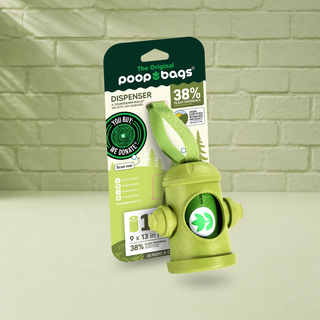
Brands like Poop Bags have built their product lines around this exact insight. By offering dispensers designed to attach directly to leashes along with high-quality, durable bags, they make the entire cleanup process seamless. It's the kind of small gear investment that pays for itself the first time it saves you from a $250 fine.
What to Look for in a Dispenser
A good one should meet a few basic criteria. It needs to attach securely to your leash or harness without bouncing or sliding. It should be easy to open and pull a bag with one hand, since your other hand is holding the leash. It should be weatherproof enough to survive rain and daily use. And it should hold a standard-size roll so you're not locked into proprietary refills. Weight matters, too. A bulky dispenser discourages use, especially on longer walks. The best designs keep the profile compact without sacrificing bag capacity, typically holding 15 to 20 bags per roll, which is enough for multiple walks before you need a refill.
Beyond Personal Use
Installing communal bag-dispenser stations is one of the most cost-effective ways to reduce pet-waste complaints. The stations serve as both a supply point and a visual reminder of the community's expectations. Paired with clearly marked waste bins, they lower the friction of compliance to near zero. The presence of bag stations in a park or walking area correlates with measurably lower rates of abandoned waste.
Protecting Yourself: A Practical Checklist for Every Dog Owner
Knowing the law and having the right gear are two halves of the same equation. Here's how to make sure you're covered on both fronts.
- Know your local ordinance. Search your city or county's municipal code for pet waste or animal control sections. Note the fine amounts, whether the law requires you to carry cleanup supplies (some jurisdictions do), and whether there are designated off-leash areas with different rules.
- Check your HOA's CC&Rs. If you live in a managed community, review the covenants, conditions, and restrictions related to pets. Pay attention to leash requirements, designated pet-relief areas, and the enforcement process for violations.
- Attach a dispenser to every leash you own. If you have multiple leashes, one for daily walks, one for hikes, and a backup for the dog walker, put a loaded dispenser on each one. The goal is to make it physically impossible to walk out the door without bags.
- Carry more bags than you think you'll need. A standard roll of 15 bags weighs almost nothing. There's no downside to having extras, and there's a very real downside to running out.
- Dispose of waste properly. Most ordinances require you to place bagged waste in a trash receptacle. Leaving a tied bag on the ground can still be cited as a violation in some jurisdictions. When in doubt, carry it to the nearest bin.
Dog waste regulations are actively evolving. A quick annual check of your local rules takes five minutes and can save you hundreds.

Dog waste laws exist at the intersection of public health, environmental protection, and community livability. They're about maintaining the shared spaces that everyone, dog owners and non-owners alike, depends on. Unscooped waste contaminates water, spreads disease, and degrades the places where children play, families gather, and neighbors walk. The legal framework reflects that reality, and it's only getting stricter. A dispenser clipped to your leash, a roll of bags that costs a few dollars, and a few seconds of effort per walk. That's the entire gap between a responsible dog owner and a potential fine, between a clean trail and a contaminated waterway, between a healthy playground and a risk of parasites.
Sources:
- U.S. Pet Ownership Statistics — American Veterinary Medical Association (AVMA)
- We Scoop to Conquer: 40 Years Since NYC's Poop-Scoop Law — American Kennel Club (AKC)
- SEC. 53.49 Dogs — Dog Defecation to Be Removed by Owners — Los Angeles Municipal Code
- Dog Poop Pollution — Environmental Protection Agency (EPA)
- Pet Waste and Water Quality — Environmental Protection Agency (EPA)
- Environmental Contamination by Dog's Faeces: A Public Health Problem? — International Journal of Environmental Research and Public Health (PMC)
- About Toxocariasis — Centers for Disease Control and Prevention (CDC)
- How Toxocariasis Spreads — Centers for Disease Control and Prevention (CDC)
- How Dog Excrement Harms the Environment — Faunalytics
- Scoop the Poop: It's Your Environmental Doody — University of Washington School of Marine and Environmental Affairs
- Dog Poop Pollutes. Here's Why You Should Pick It Up — Popular Science
- Stinky Behavior! 1 in 4 Dog Owners Don't Always Clean Up — StudyFinds
- If You Don't Stoop to Scoop — Erie County Department of Environment and Planning
- What Miami Law Says About Putting Dog Poop in a Neighbor's Trash — Axios Miami
- Animal Waste Collection — Stormwater Center
- New York Dog Poop Law — Dogster
- Phoenix City Code 27-12: Animal Waste