

The pet aisle is full of green leaves and reassuring words like "biodegradable" and "natural." Most pet parents who want to do the right thing assume the label is doing the diligence for them. The reality is messier. Many claims rely on vague language that carries no regulatory weight, and a smaller subset of brands earn third-party certifications that genuinely confirm performance. This blog post explains how to read the labels on eco-friendly poop bags without falling for marketing copy.
Why "Eco" Labels on Poop Bags Are Hard to Read
A bag's marketing copy and a bag's actual chemistry often disagree. A picture of a leaf does not guarantee plant content. The phrase "earth-friendly" does not require disclosure of feedstock or end-of-life pathway. Biodegradable poop bags that lack a third-party certification number are particularly common in the gap between language and substance.

Greenwashing thrives in three predictable places: vague adjectives without proof points, certifications mentioned without numbers, and disposal guidance that ignores what most municipalities actually offer. Brands that prefer ambiguity to detail are usually doing so on purpose, and the absence of specifics is itself a useful warning signal worth paying attention to during checkout. Choosing a misleading product means paying a premium for a bag that performs no better than conventional plastic. The environmental harm is the same as that of a generic bag, and the consumer trust eroded by the experience often turns shoppers away from credible alternatives later.
The Vocabulary of Eco Labels
"Biodegradable" vs "Compostable" vs "Degradable"
These three terms are often used interchangeably. They are not equivalent. "Degradable" usually means the plastic breaks into smaller pieces, which often means microplastics. "Biodegradable" means microbial breakdown is possible under defined conditions. Compostable poop bags must meet specific standards that cover breakdown rate and disintegration in industrial composting facilities.
"Plant-Based"
A plant-based bag may contain anywhere from a small fraction to nearly all plant-derived polymer. Without a percentage on the label, "plant-based" is essentially a mood. Plant-based poop bags are worth buying, as they disclose a verified percentage backed by USDA BioPreferred testing or another credible third-party lab.
"Recyclable" Claims on Films That Are Not
Pet bag films are rarely recyclable through curbside programs. Soft plastic recycling, where it exists, depends on local infrastructure. The U.S. Environmental Protection Agency's pet waste guidance indicates that even bagged waste needs proper routing to a landfill or composting facility. A "recyclable" claim deserves immediate verification with your local hauler.
Third-Party Certifications That Mean Something
ASTM D6400 and ASTM D6868
A certification is only as good as its testing protocol and the body issuing it. The strongest stamps follow rigorous methods and require periodic re-verification. ASTM D6400 is the U.S. specification for compostable plastics in industrial composting. It tests the biodegradation rate, disintegration, and the toxicity of finished compost. ASTM D6868 covers compostable coatings on paper-based products. Bags meeting these standards carry a certified compostable dog poop bags designation that can be independently verified through the certifier's database.
USDA Certified Biobased
The USDA BioPreferred Program tests products via radiocarbon dating to confirm biobased carbon content. USDA-certified biobased poop bags carry a percentage label backed by lab measurement. The certification confirms plant content but not compostability, which is why pairing it with ASTM D6400 provides the strongest signal a buyer can find.
BPI (Biodegradable Products Institute)
Their certification is based on ASTM D6400 testing and includes independent oversight. The BPI database lets buyers verify a product by brand and SKU. Pet bags that carry the BPI logo represent the upper tier of credible compostable claims in the U.S. market.
TÜV OK Compost and EN 13432
TÜV Austria's OK Compost program and the European EN 13432 standard offer rigorous certification, including a separate home-compost certification. Brands selling globally often pursue multiple certifications so retailers and buyers in different regions can verify the same product against the standard relevant to their disposal infrastructure.
Government Guidance Worth Reading
The FTC Green Guides
The Federal Trade Commission's Green Guides outline how environmental marketing claims must be substantiated under U.S. law. Vague terms are explicitly addressed. Brands violating the guides face enforcement action. The Green Guides are written for marketers but read clearly for consumers willing to spend a single afternoon reviewing the rules.
USDA BioPreferred Program and EPA Composting Best Practices
The USDA BioPreferred Program publishes a searchable catalog of certified products with their tested biobased percentages. Buyers can confirm any bag's claim directly. The database is the fastest verification tool for plant content claims and is regularly updated with new and renewed certifications. The U.S. Environmental Protection Agency's composting at home page describes which materials belong in residential composting and which require industrial facilities. Pet waste handling has its own special considerations due to the risk of pathogens. Bag selection should align with the disposal pathway the household actually uses.
Red Flags That Should Make You Suspicious
Vague Claims Without Numbers
Claims without numerical detail are red flags. Real biodegradable poop bags disclose specific time frames, certification numbers, and disposal conditions. Vague language is the easiest greenwashing tactic and the most common across pet aisle packaging.

"Compostable" With No Disposal Guidance
Compostable bags need industrial composting in most cases. A label that says "compostable" but does not specify the conditions or the recommended disposal route fails the basic transparency test. Honest brands name their certification and explain the realistic end-of-life pathway directly on the package. Degradable poop bags that promise quick breakdown without specifying the conditions are usually relying on optimistic lab settings that do not match real-world disposal.
How to Verify an Eco Claim in Five Minutes
A short verification routine catches most greenwashing without slowing down the shopping experience. The same routine works on shelf packaging and online product listings:
- Search the Certifier's Database: Type the brand name and product into the database to confirm the certification is current and applies to the specific product you want. Five seconds of searching usually settles the question.
- Look for the Specific Standard Number: Genuine certifications cite a standard. As mentioned, ASTM D6400, EN 13432, and the USDA BioPreferred Mark percentage all appear with associated numbers. ASTM D6400 poop bags explicitly bear the standard. A logo without a number is not a verified certification, regardless of how official the graphic appears.
- Cross-Reference Material Claims: Plant content and compostability are separate claims that need separate verification. A bag may carry USDA BioPreferred certification confirming plant content, but lack ASTM D6400 confirming compostability. Knowing which claim a certification actually covers prevents the common confusion that one stamp implies the other.
The most credible bag is wasted if you cannot dispose of it correctly. Confirm with your municipality whether industrial composting accepts pet waste.
Comparing Bags On The Shelf or Online
The Three-Question Test
Ask three things of any eco bag:
- What percentage is plant content?
- Which certification does it carry?
- Where does the bag go for proper disposal?
Answers to all three put a product solidly in the credible camp. Missing answers signal that the marketing is doing more work than the product.
Reviews highlight whether bags hold up during real walks. Look for repeated mentions of tearing, leaking, or unusual smell, all of which indicate weaker films than the marketing implies. Authentic eco poop bags rarely accumulate consistent complaints about quality because real performance and good chemistry are correlated rather than independent.
Building a Personal Verification Habit
A small set of habits turns occasional verification into a background routine. Bookmark certifier database links and screenshot certifications you have already verified. The folder takes minutes to set up. Re-shopping the same bag becomes instant when the verification is already filed away. The habit also makes it easy to compare new options against the standard you already trust. ASTM, BPI, and USDA BioPreferred all publish updates when standards change or new products are certified. A short subscription keeps you current without effort. Trustworthy eco poop bags sometimes lose certification as standards tighten, and staying informed helps prevent unknowingly buying outdated products.
Online forums and dog park conversations all benefit when one owner shares verified information. Earth-friendly poop bags become more accessible to everyone when the verification work happens once rather than 50 times. The cumulative time saved across a community of pet parents is significant

The pet aisle rewards careful readers. Eco-friendly poop bags that hold up to scrutiny are out there, and they reward the few minutes it takes to verify a claim before you buy. The Original Poop Bags® approach to certification and donation transparency illustrates what a credible brand looks like.
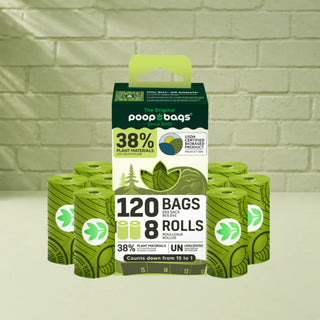
Check the Countdown Rolls line and the You Buy; We Donate® program for examples of how transparency, certification, and mission alignment can reinforce each other across a single product line. Better label literacy translates directly into better daily choices, fewer disappointments, and a meaningfully smaller environmental footprint over the lifetime of pet ownership.
Sources
- ASTM International. (2023). ASTM D6400-23: Standard specification for labeling of plastics designed to be aerobically composted in municipal or industrial facilities. AstmStandard Specification for Labeling of Plastics Designed to be Aerobically Composted in Municipal or Industrial Facilities
- Biodegradable Products Institute. (2023). Compostable products certification. BpiworldBPI - Certified Compostable
- Federal Trade Commission. (2012). Guides for the use of environmental marketing claims, 16 CFR Part 260. FtcGreen Guides
- Geyer, R., Jambeck, J. R., & Law, K. L. (2017). Production, use, and fate of all plastics ever made. Science Advances, 3(7), e1700782. Doidoi.org/10.1126/sciadv.1700782
- Napper, I. E., & Thompson, R. C. (2019). Environmental deterioration of biodegradable, oxo-biodegradable, compostable, and conventional plastic carrier bags in the sea, soil, and open-air over a 3-year period. Environmental Science & Technology, 53(9), 4775-4783. Doidoi.org/10.1021/acs.est.8b06984
- U.S. Department of Agriculture. (2024). USDA BioPreferred Program. BiopreferredBioPreferred
- U.S. Environmental Protection Agency. (2023). Composting at home. EpaComposting At Home | US EPA
- U.S. Environmental Protection Agency. (2023). Managing pet and wildlife waste. Epaepa.gov/nps/managing-pet-and-wildlife-waste